What is Virtual Private Cloud?
A Virtual Private Cloud (VPC) is a secure, isolated section of a public cloud where you can deploy and manage your cloud resources—such as virtual machines, databases, and applications—with full control over networking and security. With a VPC, you define your own IP address ranges, create subnets, configure routing tables, and set up firewalls and gateways, allowing you to build a custom network architecture tailored to your needs.
VPCs and the 3-Tier Architecture
VPCs commonly follow a 3-tier network architecture, which is a widely adopted design for building scalable and secure applications. This structure separates resources into three layers:
- Web Tier – Handles incoming traffic from users, often through load balancers.
- Application Tier – Hosts the core business logic and processes requests from the web tier.
- Database Tier – Stores and manages data, typically secured in private subnets with no direct internet access.
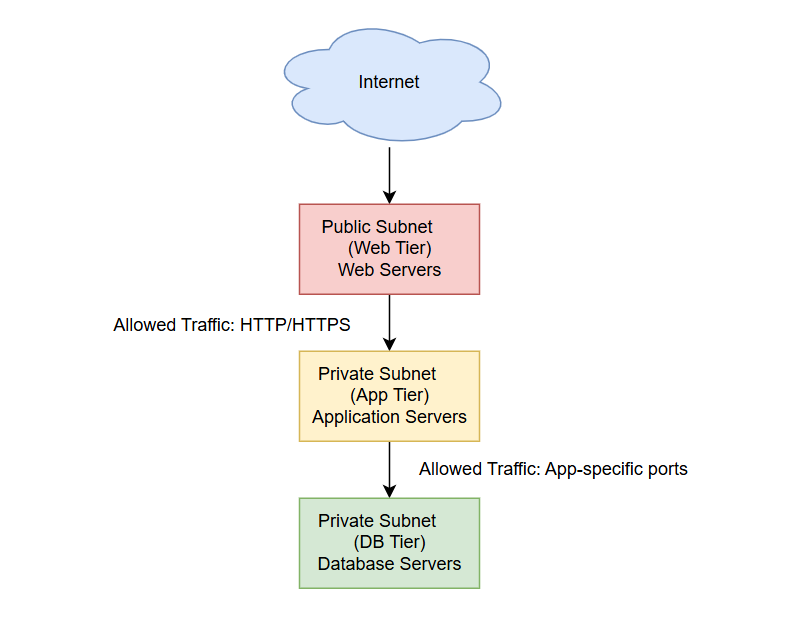 This tiered model improves security (by isolating each layer), scalability (you can scale tiers independently), and maintainability.
Use Cases of VPCs
- E-commerce Platforms
An online store may use a VPC to host its website frontend in the web tier, a backend order processing system in the application tier, and customer/order data in the database tier. - Enterprise Applications
Businesses running ERP or CRM systems in the cloud use VPCs to isolate sensitive internal applications, ensuring that only internal users or VPN-connected staff can access them. - SaaS Products
A SaaS provider might deploy multi-tenant applications in a VPC, isolating customer environments using different subnets and security groups, while managing shared services securely within the same virtual network. - Hybrid Cloud Deployments
Companies with on-premises infrastructure can extend their network into the cloud using VPCs, connecting both environments securely via VPN or direct connect for disaster recovery or data processing needs.
A VPC offers the flexibility and control of traditional on-premises networking with the scalability and convenience of the cloud. It supports modern application design patterns like the 3-tier architecture, and is used widely across industries for securely deploying, scaling, and managing cloud workloads—from public-facing websites to internal enterprise systems.